Trying to pick the best AI content generator? An AI content generator is software that uses machine learning to help you get more done — it scales effortlessly from a single task to thousands. The best picks balance beginner-friendly simplicity with the depth power users need, and they ship updates often. Whether you are a beginner or a pro, the right AI content generator slots into your workflow and pays for itself fast. This guide breaks down the top picks, their pros and cons, and who each one is best for.
Dr. Sbaitso
Dr. Sbaitso ( SPAYT-soh) is an artificial intelligence speech synthesis program released late in 1991 by Creative Labs in Singapore for MS-DOS-based personal computers. The name is an acronym for "SoundBlaster Acting Intelligent Text-to-Speech Operator." == History == Dr. Sbaitso was distributed with various sound cards manufactured by Creative Technology in the early 1990s. The text-to-speech engine used is a version of Monologue, which was developed by First Byte Software. Monologue is a later release of First Byte's "SmoothTalker" software from 1984. The program "conversed" with the user as if it were a psychologist, though most of its responses were along the lines of "WHY DO YOU FEEL THAT WAY?" rather than any sort of complicated interaction. When confronted with a phrase it could not understand, it would often reply with something such as "THAT'S NOT MY PROBLEM." Dr. Sbaitso repeated text out loud that was typed after the word "SAY." Repeated swearing or abusive behavior on the part of the user caused Dr. Sbaitso to "break down" in a "PARITY ERROR" before resetting itself. The same would happen, if the user types "SAY PARITY." The program introduced itself with the following lines: HELLO [UserName], MY NAME IS DOCTOR SBAITSO. I AM HERE TO HELP YOU. SAY WHATEVER IS IN YOUR MIND FREELY, OUR CONVERSATION WILL BE KEPT IN STRICT CONFIDENCE. MEMORY CONTENTS WILL BE WIPED OFF AFTER YOU LEAVE, SO, TELL ME ABOUT YOUR PROBLEMS. The program was designed to showcase the digitized voices the cards were able to produce, though the quality was far from lifelike. Additionally, there was a version of this program for Microsoft Windows through the use of a program called Prody Parrot; this version of the software featured a more detailed graphical user interface. The text-to-speech was also used as the voice of 1st Prize from the Baldi's Basics series, albeit slowed down. == Commands == If the user submits "HELP", a list of commands will appear. If the user then submits "M", more commands will appear. There are three pages of commands in total, with guidance on how to use each of the features.
CinePlayer
CinePlayer is a software based media player used to review Digital Cinema Packages (DCP) without the need for a digital cinema server by Doremi Labs. CinePlayer can play back any DCP, not just those created by Doremi Mastering products. In addition to playing DCPs, CinePlayer can also playback JPEG2000 image sequences and many popular multimedia file types. There are two versions of CinePlayer available, standard and Pro. The standard version supports playback of non-encrypted, 2D DCP's up to 2K resolution. The Pro version supports playback of encrypted, 2D or 3D DCP's with subtitles up to 4K resolution. == Supported formats == === Containers === AVI MOV MXF MPG TS WMV M2TS MTS MP4 MKV === Video codecs === JPEG2000 ProRes 422 DNxHD YUV Uncompressed 8-10 bits DIVX XVID MPEG4 AVC / H-264 VC-1 MPEG2 === Supported image sequences === BMP TIFF TGA DPX JPG J2C === Supported audio files === WAV MP3 WMA MP2
Cepstral mean and variance normalization
Cepstral mean and variance normalization (CMVN) is a computationally efficient normalization technique for robust speech recognition. The performance of CMVN is known to degrade for short utterances. This is due to insufficient data for parameter estimation and loss of discriminable information as all utterances are forced to have zero mean and unit variance. CMVN minimizes distortion by noise contamination for robust feature extraction by linearly transforming the cepstral coefficients to have the same segmental statistics. Cepstral Normalization has been effective in the CMU Sphinx for maintaining a high level of recognition accuracy over a wide variety of acoustical environments. == Cepstral Normalization Techniques == There are multiple algorithms that achieve Cepstral Normalization in different ways. === Fixed codeword-dependent cepstral normalization (FCDCN) === FCDCN was developed to provide a form of compensation that provides greater recognition accuracy than SDCN but in a more computationally-efficient manner than the CDCN algorithm. The FCDCN algorithm applies an additive correction that depends on the instantaneous SNR of the input (like SDCN), but that can also vary from codeword to codeword (like CDCN). === Multiple Fixed Codeword-dependent Cepstral Normalization (MFCDCN) === MFCDCN is a simple extension of FCDCN algorithm that does not need environment specific training. In MFCDCN, compensation vectors are pre-computed in parallel for a set of target environments, using the FCDCN algorithm. === Incremental Multiple Fixed Codeword-dependent Cepstral Normalization (IMFCDCN) === While environment selection for the compensation vectors of MFCDCN is generally performed on an utterance-by-utterance basis, IMFCFCN improves on it by allowing the classification process to make use of cepstral vectors from previous utterances in a given session. == Cepstral Noise Subtraction == Automatic speech recognition (ASR) describes the steps of transcribing speech utterances represented as acoustic wave forms to written words. As is, CMVN has been used in different applications as this technique has proven to provide better speech recognitions results in different environments. CMVN has the capabilities to reduce differences between test and training data produced by channel distortions and colorizations . CMVN has also been found to be able to reduce differences in feature representation between speakers can also partly reduce the influence of background noise.
RagTime
RagTime is a frame-oriented business publishing software which combines word processing, spreadsheets, simple drawings, image processing, and charts, in a single document/program, integrated software. It is often used to create forms, reports, documentation, desktop publishing, and in office environments. Typical users are business clients, educational institutions, administrations, architects, and also private users. Ragtime includes the following modules: Page layout (forms, templates etc.) Word processing Image processing Spreadsheets, similar to Microsoft Excel Formulas and functions which can be used throughout, in text, graphics, and spreadsheets Charts in different types of diagrams Drawings in vector graphics including lines, polygons, Bézier curves and more Slide show (presentation of RagTime documents) Audio/video Buttons (pop-up menus, switches, and more) that can be used within RagTime documents Import/export of various file formats Support of the AppleScript scripting language available system-wide under macOS == Principle == RagTime differs from most other comparable programs or software packages in its strict frame-oriented design: all content is contained within frames on each page. The content can have a fixed position within its frame or, if it is text or a spreadsheet, flow into another frame that is connected to the first frame via a so-called “pipeline”. RagTime has no different document types for different types of data; all content is stored in a single compound document type. Thus, a RagTime document not only can contain multiple pages, but also multiple layouts within the same document; e.g. spreadsheets in addition to text and images. The RagTime filename extension is .rtd (RagTime document); for templates the extension is .rtt (RagTime template). The current version is RagTime 6.6.5. It is available for OS X (10.6-10.14) and Windows (XP/Vista/7/8/10). == Extensions == FileTime – allows accessing “FileMaker Pro” databases from RagTime documents under OS X RagTime Connect – ODBC database connection for RagTime 6 (Mac and Windows) Johannes – print extension for the simple creation of stapled or folded brochures, booklets etc. PowerFunctions – additional functions for a more effective creation of intelligent documents for exchanging data and for use in mixed Mac/Windows environments MetaFormula – SYLK-based extension that allows calculating text as formula == History == RagTime has been developed since 1985 for the Macintosh – originally named MacFrame – and was published in 1986. When released, it already had the present name, which was chosen following the then-available software package Lotus Jazz. In the European Macintosh market, RagTime quickly gained a prominent position that continues to this day, even though the market share has decreased. Despite repeated attempts, the program could not gain acceptance in the North American market due to its high cost ($395 in 1990). The North American sales office closed in 1991, shortly after Claris Corporation released ClarisWorks which duplicated much of the functionality of RagTime for a lower price. After the manufacturer – first Brüning & Everth, followed by B&E Software and today RagTime.de Development – had focused on the Macintosh only for a very long time, it also released a Windows version, RagTime 5.0, in 1999. However, the program could not assume great significance against established competitors, especially Microsoft Office. Until mid-2006 RagTime was, in addition to the commercial version, also available as a free version (RagTime Solo) for personal use. RagTime Solo included the same features and performance (except for spelling and Syllabification) dictionaries), but was not allowed for use in commercial environments. In other languages RagTime Solo was distributed as RagTime Privat. In a press release from July 5, 2006, RagTime announced the discontinuation of RagTime Solo: “… the RagTime Solo license conditions were often misinterpreted or deliberately flouted. Therefore we discontinued RagTime Solo, there will be no private version of RagTime 6 anymore.” After a successful start of the RagTime 6.0 software, sales edged significantly lower in the following years. Disagreements arose among the shareholders about the continuation of the company, which filed for bankruptcy in July 2007. As a result, the rights to RagTime were taken over by the newly established company RagTime.de Development GmbH, which was responsible for the development. The sales partner RagTime.de Sales GmbH distributed the RagTime products until October 2015. Today RagTime.de Development GmbH is also responsible for sales. The last level of development is the extensively revamped version RagTime 6.6 of 8 October 2015, which also includes new OS X features (e.g. high-resolution “Retina” displays) and supports Windows 10. == Programming == RagTime 1-3 were developed in Pascal, since version 4 the development is completely coded in C++. External programming and automation can be implemented via AppleScript on a Mac, and via OLE/COM-API (e.g. Visual Basic) under Windows. On a Mac, RagTime provides a comprehensive AppleScript library, for the automation of almost any task, from automatic document creation to the export of PDF documents. RagTime also supports “recordings” by use of the “AppleScript Editor”, which allows recording the interactive RagTime operation as an AppleScript program sequence. AppleScripts can be saved in the RagTime document and called via menu or shortcut keys. On Windows, RagTime (since version 6) disposes over an OLE/COM API, which allows automating many RagTime components via external programming. For that purpose there is a type library that installs the available RagTime OLE/COM object catalogue. Programming can be realized in all programming languages supported by Microsoft.
World Database of Happiness
The World Database of Happiness is a web-based archive of research findings on subjective appreciation of life, based in the Erasmus Happiness Economics Research Organization of the Erasmus University Rotterdam in The Netherlands. The database contains both an overview of scientific publications on happiness and a digest of research findings. Happiness is defined as the degree to which an individual judges the quality of his or her life as a whole favorably. Two 'components' of happiness are distinguished: hedonic level of affect (the degree to which pleasant affect dominates) and contentment (perceived realization of wants). == Aims == The World Database of Happiness is a tool to quickly acquire an overview on the ever-growing stream of research findings on happiness Medio 2023 the database covered some 16,000 scientific publications on happiness, from which were extracted 23,000 distributional findings (on how happy people are) and another 24,000 correlational findings (on factors associated with more and less happiness). The first findings date from 1915. == Technique == The World Database of Happiness is a ‘findings archive’, which consists of electronic ‘finding pages’ on which separate research results are described in a standard format and terminology. These finding pages can be selected on various characteristics, such as population studies, the measure of happiness used and observed co-variates. All finding-pages have a specific internet address to which links can be made in scientific review papers or policy recommendations. This allows a concise presentation of many findings in a table, while providing readers with access to detail. == Scientific use == The Database has been cited in 254 scientific papers, for example to access under what conditions economic growth enhances average happiness or to show that rising mean happiness at first raises happiness inequality, but further rise will diminish these differences, or that healthy eating is associated with more happiness, even after controlling for the effect on health Another finding is that relative simple happiness training techniques raise happiness by some 5% == Popular use == The World Database of Happiness is often used by popular media to make lists of the happiest countries around the globe. An example is the Happy Planet Index, which aims to chart sustainable happiness all over the world by combining data on longevity, happiness and the size of the ecological footprint of citizens. == Strengths and weaknesses == The database has a clear conceptual focus, it includes only research findings on subjective enjoyment of one's life as a whole. Thereby it evades the Babel that has haunted the study of happiness for ages. The other side of that coin is that much interesting research is left out. The findings are reported with technical details about measurement and statistical analysis. This detail is welcomed by scholars, but makes the information difficult to digest for lay-persons. Still another limitation is that the determinants of happiness appear to vary considerably across persons and situations, which make it hard to draw general conclusions about the causes of happiness. What is clear is that poor health, separation, unemployment and lack of social contact are all strongly negatively associated with happiness. Another problem for the World database of happiness is that the studies on happiness increase with such a high rate that it gets increasingly difficult to offer a complete overview of all research findings. A further concern is that the Database of Happiness is exclusively focused on hedonic happiness (feeling good) and not on mature happiness that might exist in the face of suffering
Open-source robotics
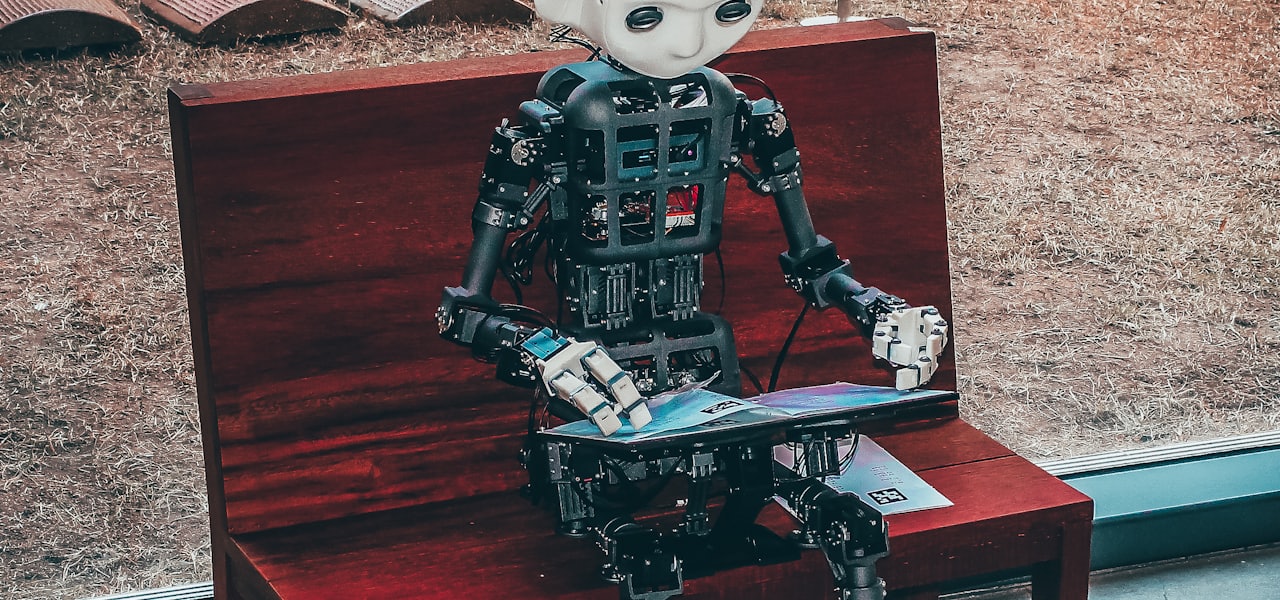
Open-source robotics is a branch of robotics where robots are developed with open-source hardware and free and open-source software, publicly sharing blueprints, schematics, and source code. It is thus closely related to the open design movement, the maker movement and open science. == Requirements == Open source robotics means that information about the hardware is easily discerned, so that others can easily rebuild it. In turn, this requires design to use only easily available standard subcomponents and tools, and for the build process to be documented in detail including a bill of materials and detailed ('Ikea style') step-by-step building and testing instructions. (A CAD file alone is not sufficient, as it does not show the steps for performing or testing the build). These requirements are standard to open source hardware in general, and are formalised by various licences, certifications, especially those defined by the peer-reviewed journals Journal of Open Hardware and HardwareX. Licensing requirements for software are the same as for any open source software. But in addition, for software components to be of practical use in real robot systems, they need to be compatible with other software, usually as defined by some robotics middleware community standard. == Hardware systems == Applications to date include: Robot arms, e.g. PARA or Thor Wheeled mobile robots. e.g. OpenScout Four-legged robots such as the Open Dynamic Robot Initiative UAV quadcopters (drones) such as Agilicious Humanoid robots, e.g. iCub, Berkeley Humanoid Lite Self-driving cars, e.g. OpenPodcar (→ Personal rapid transit) Submersible robots, eg. OpenFish Laboratory robotics such as chemical liquid handling Vertical farming Swarm robots, e.g. HeRoSwarm Domestic tasks: vacuum cleaning, floor washing and grass mowing Robot sports including robot combat and autonomous racing Education == Hardware subcomponents == Most open source hardware definitions allow non-open subcomponents to be used in modular design, as long as they are easily available. However many designs try to push openness down into as many subcomponents as possible, with the aim of ultimately reaching fully open designs. Open hardware manual-drive vehicles and their subcomponents, such as from Open Source Ecology, are often used as starting points and extended with automation systems. Open subcomponents can include open-source computing hardware as subcomponents, such as Arduino and RISC-V, as well as open source motors and drivers such as the Open Source Motor Controller and ODrive. Open hardware robotics interface boards can simplify interfacing between middleware software and physical hardware. == Software subcomponents == === Middleware === Robotics middleware is software which links multiple other software components together. In robotics, this specifically means real-time communication systems with standardized message passing protocols. The predominant open source middleware is ROS2, the robot operating system, now as version 2. Other alternatives include ROS1, YARP — used in the iCub, URBI, and Orca. Open source middleware is usually run on an open source operating system, especially the Ubuntu distribution of Linux. === Driver software === Most robot sensors and actuators require software drivers. There is little standardization of open source software at this level, because each hardware device is different. Creating open drivers for closed hardware is difficult as it requires both low level programming and reverse engineering. === Simulation software === Open source robotics simulators include Gazebo, MuJoCo and Webots. Open source 3D game engines such as Godot are also sometimes used as simulators, when equipped with suitable middleware interfaces. === Automation software === At the level of AI, many standard algorithms have open source software implementations, mostly in ROS2. Major components include: Machine vision systems such as the YOLO object detector. 3D photogrammetry Navigation including SLAM and planning such as nav2 Arm inverse kinematics such as moveIt2 == Community == The first signs of the increasing popularity of building and sharing robot designs were found with the maker culture community. What began with small competitions for remote operated vehicles (e.g. Robot combat), soon developed to the building of autonomous telepresence robots such as Sparky and then true robots (being able to take decisions themselves) as the Open Automaton Project. Several commercial companies now also produce kits for making simple robots. The community has adopted open source hardware licenses, certifications, and peer-reviewed publications, which check that source has been made correctly and permanently available under community definitions, and which validate that this has been done. These processes have become critically important due to many historical projects claiming to be open source but them reverting on the promise due to commercialisation or other pressures. As with other forms of open source hardware, the community continues to debate precise criteria for 'ease of build'. A common standard is that designs should be buildable by a technical university student, in a few days, using typical fablab tools, but definitions of all of these subterms can also be debated. Compared to other forms of open source hardware, open source robotics typically includes a large software element, so involves software as well as hardware engineers. Open source concepts are more established in open source software than hardware, so robotics is a field in which those concepts can be shared and transferred from software to hardware. While the community in open source robotics is multi-faceted with a wide range of backgrounds, a sizable sub-community uses the ROS middleware and meets at the ROSCon conferences to discuss development of ROS itself and automation components built on it.